How to Use a Personal Expense Tracker App for Better Budget and Money Management
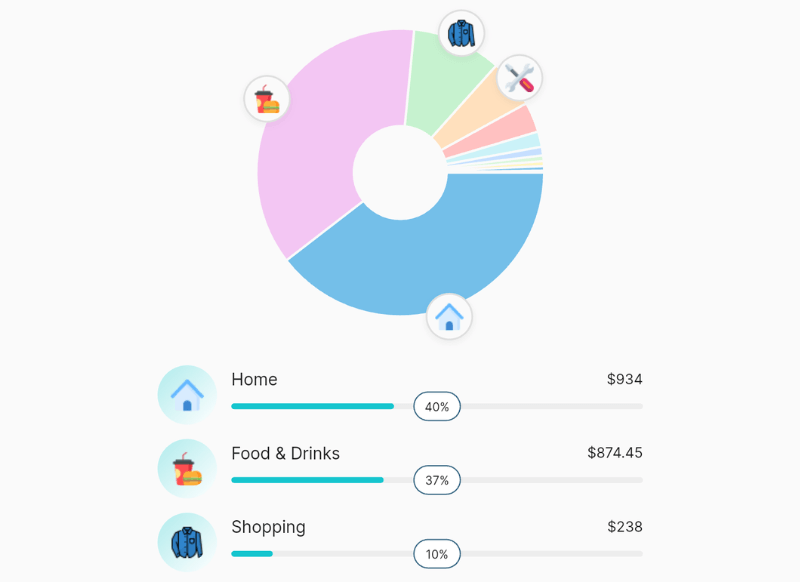
Learn how a personal expense tracker can help you with your spending and build better money habits. Start tracking your expenses for stress-free finances.
The fundamental, most straightforward step toward managing one's finances is cultivating a basic habit — keeping a record of expenditures. Watching one's financial outgoings gives a direct view of the money going out, uncovers the unwise spending, and even makes it possible to choose options closer to one's money goal. Besides, expense tracking might not merely be a partner in saving for a large purchase, but also in paying off debts or having a more flexible budget. Hence, expense control is the first step to financial enlightenment.
Why Is Expense Tracking Essential?
Most people have never thought about the total of small purchases. A few coffee purchases, online subscriptions, or delivery fees might not look like much at all, but when tossed together, they can actually consume a large portion of your monthly income. In the end, a personal expenses tracker will not only give you total control over your cash flow but will also allow you to start being more strategic in managing your finances.
What Are the Benefits of Using a Personal Expense Tracker?
Indeed, the main advantage of a personal expense tracker is the financial clarity it adds to your life. It helps to understand precisely where the money goes, rather than having vague ideas about it. Thus, the beginning of understanding is being your spending under control, and that is when financial progress indeed starts.
Awareness and control: Being careful about buying every single item becomes quite the opposite situation when you monitor each expense. Eventually, you will start questioning unplanned spending and making conclusive decisions.
Better budgeting: When you have definite evidence of your spending habits, you are free to set a budget that does not kill you — one that reflects your way of life rather than restricting it.
Debt decrease: Tracking your expenses will enable you to spot non-essentials that, if you reduce or eliminate your consumption, could be directed toward the quicker repayment of loans or the settling of credit cards.
Financial confidence: The moment you know your finances clearly, you will no longer be uncertain. You will be assured that even your savings are increasing and that your goals are attainable.
How Do You Build a Lifelong Expense Tracking Habit?
Recording your financial outgoings is not a self-imposed limitation but rather a technique that gradually makes you more aware of your finances. The culture of expense tracking should eventually become a daily habit that goes along with your lifestyle. Just a few minutes every day or a dedicated time once a week can be spent on checking and documenting your expenses.
When you make expense tracking an unremitting activity, you are doing so much more than just managing the money. Instead, you're creating a financial support system aligned with your future.
How Do You Start Tracking Your Expenses?
1. Determine your preferred tracking method. Select a system that is either manual or digital, and that you think is easy to use and maintain.
2. Classifying your expenses by category. Group your expenditures into main categories: food, housing, transport, health care, savings, and leisure.
3. Keep a record of every expense without delay. Write all purchases, whether large or small, immediately after they occur. Record the date, amount, and category in order to maintain the accuracy of your records.
4. Weekly or monthly analysis. Spend a very small portion of your time just to see your total amounts and to identify patterns.
Rolly App: Smarter Budgeting with the 50/30/20 Rule
The Rolly App is providing a very organised way of controlling finances with a straightforward and neat method of budgeting which follows the 50/30/20 guideline — a famous rule that splits the income into three parts: half for needs, thirty percent for wants, and twenty percent for saving. To illustrate, it handles the distribution task and instantly partitions the 5,000 SGD monthly paycheck into 2,500 SGD for basic living expenses, 1,500 SGD for luxury living expenses, and 1,000 SGD for savings.
What makes this even more powerful is Rolly's AI budgeting tool, which analyses your spending patterns, suggests smarter category adjustments based on your real behaviour. Instead of rigid budgeting, Rolly adapts to your lifestyle, helping you optimise where your money should go while still keeping the 50/30/20 framework intact.
Rolly is not only a numbers show; we guide users toward becoming conscious consumers by balancing consumption needs, enjoying life at times, and consistently saving. Our app's user-friendly design allows even the most inexperienced users to engage in financial planning, monitor their spending patterns, and reallocate categories as actual costs change each month.
Rolly App is the smart tool you need to build better money habits today, from basic budgeting and mindful spending to AI-guided financial planning. Download it now from the App Store or Google Play, or use our web version to start managing your money with clarity and confidence.